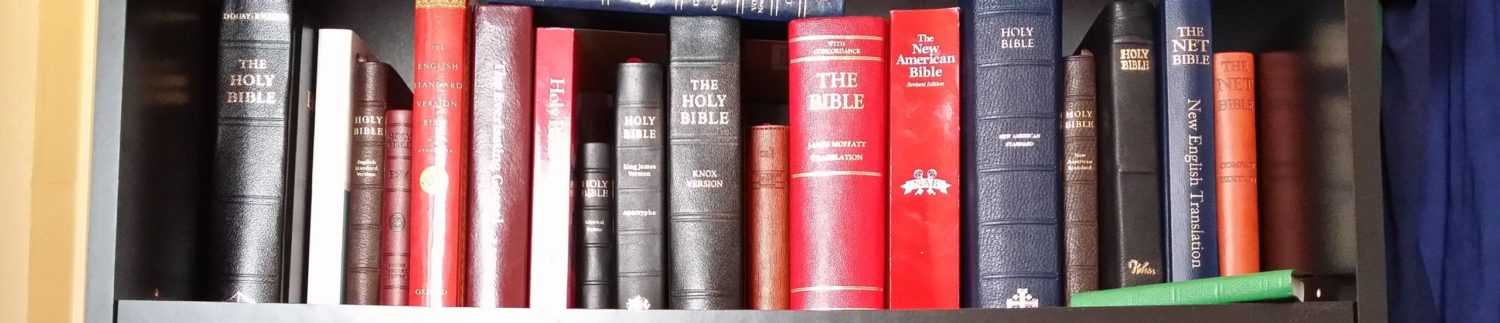
Evaluating Different Bibles by Literalness
Evaluating Different Bibles by Literalness
By David Cox
This post is to help us get a focus on the difference between Bible versions. To get a focus on the subject of Bibles, we need to understand that there are different translation theories used in translating the Bible (or any literary work) from one language to another.
 Biblical Definition of Spiritual Abuse explains false prophets acting as shepherd or pastors and how to identify them.
(https://www.theologicalsystems.com/spiritual-abuse-cults/biblical-definition-of-spiritual-abuse/)
Biblical Definition of Spiritual Abuse explains false prophets acting as shepherd or pastors and how to identify them.
(https://www.theologicalsystems.com/spiritual-abuse-cults/biblical-definition-of-spiritual-abuse/)
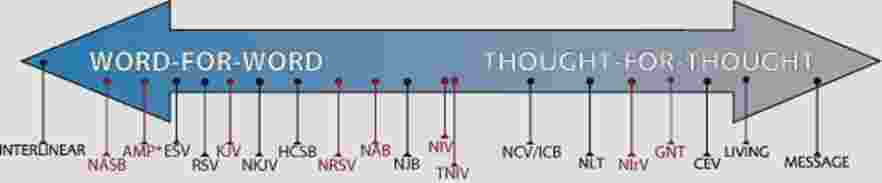
Some tend to be rigid and exact, ignoring the idioms and good grammar forms in order to accurately as possible represent the original in another language. This is a literal Bible version. The goal of a literal version is keep the concepts in both original and translation by linking them as closely as possible to exact words. This cannot always be done, but in a large part is totally possible.
A translation theory that makes its goal, thought for thought is one that will take some liberty in the ways it expresses the original thought, but basically sticks to the original words linking to exact words in the final production. This is a often referred to as a dynamic equivalence version.
Other translation theories try to make the same common sense as normal speech from the Bible in its original language. This is easiest to read and understand (the plus that causes people to choose this translation theory), but actually the translator “takes many liberties” in translating. As an extreme, this is a paraphase Bible version, and more conservatively many popular Bible versions fall back to being more literal, but still much liberty is being used.
I am not an expert in translation theory, but each Bible can “generally” be placed as tending toward literalness or towards a paraphrase. I will use a distinction here and say that a paraphrase is a Bible where there is no attempt to keep to one-to-one correspondence between the words of the original and the translation.
A popular version is one where there is that paraphrase (interpreting generally instead of exact bonding of word concepts one to one, original to translation) is very present, but it is not a flowing commentary either (a paraphrase). A popular version holds to some bonding of exact words, which paraphrases often totally abandon.
We can think of this as a spectrum, with the extremes on the ends. This is very well represented by this chart (apbrown2.net).
Advertisement
Dagg Doctrine of God is a 14 chapter work on the Person of God, His existence, His Attributes, which are Unity, Spirituality, Omnipresence, eternity, immutability, Omniscience, Omnipotence, Goodness, Truth, Justice, Holiness, Wisdom.
PDF: Dagg Doctrine of God
theWord: Dagg Doctrine of God
MySword: Dagg Doctrine of God
eSword: Dagg Doctrine of God